路德维希·密斯·凡德罗传记
 2022-02-15
 2013
2013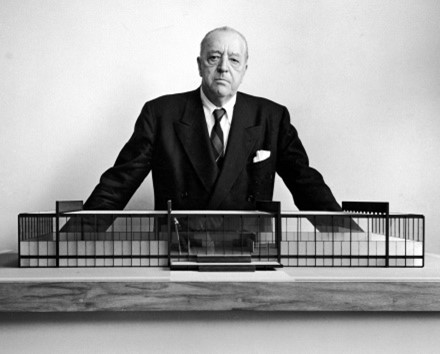
Preoccupied with the necessity of a new architectural vision encapsulating the spirit of modern times, he developed avant-garde ideas that reformed the man-made environment: simplicity of forms; industrial materials such as industrial steel and plate glass; clean, unadorned interiors would become the main elements of his style. In the 1920s and early 1930s, van der Rohe’s reputation took off and he briefly served as the Bauhaus’s third and final director until 1933, when the school closed down due to political pressure. In 1937, he relocated to Chicago, where he continued to design, build and educate. He took up a role as the head of the College of Architecture at the Armour Institute in Chicago, a position that would leave a lasting legacy on both his curriculum and the campus.
The abundent commissions he received after the turmoil of World War II gave van der Rohe an opportunity to execute his first large-scale projects including his pioneering skysrapers of steel covered by large surface areas of glass windows. The Lake Shore Drive Apartments (1949–51) in Chicago and the Seagram Building (1956–58) in New York City are among his major commissions that follow this concept. In the 1960s, van der Rohe continued to design and create public centres like The Neue Nationalgalerie (1968) in Berlin, urban-renewal projects such as Detroit’s Lafayette Park (1959), libraries and offices across the Americas, Mexico and Europe.